
Multi-model AI gives agency teams the freedom to choose the right model, compare outputs side by side, sanity-check their work, and keep client context connected throughout production.
New AI models ship constantly. The goal is not to choose one and commit to it. The goal is to use the right model for each task, without message caps, disconnected subscriptions, or switching between tools.
Most agencies aren't there yet. Their teams have access to one model, maybe two, with no efficient way to compare outputs or validate which response is better.
Access every model, for every task
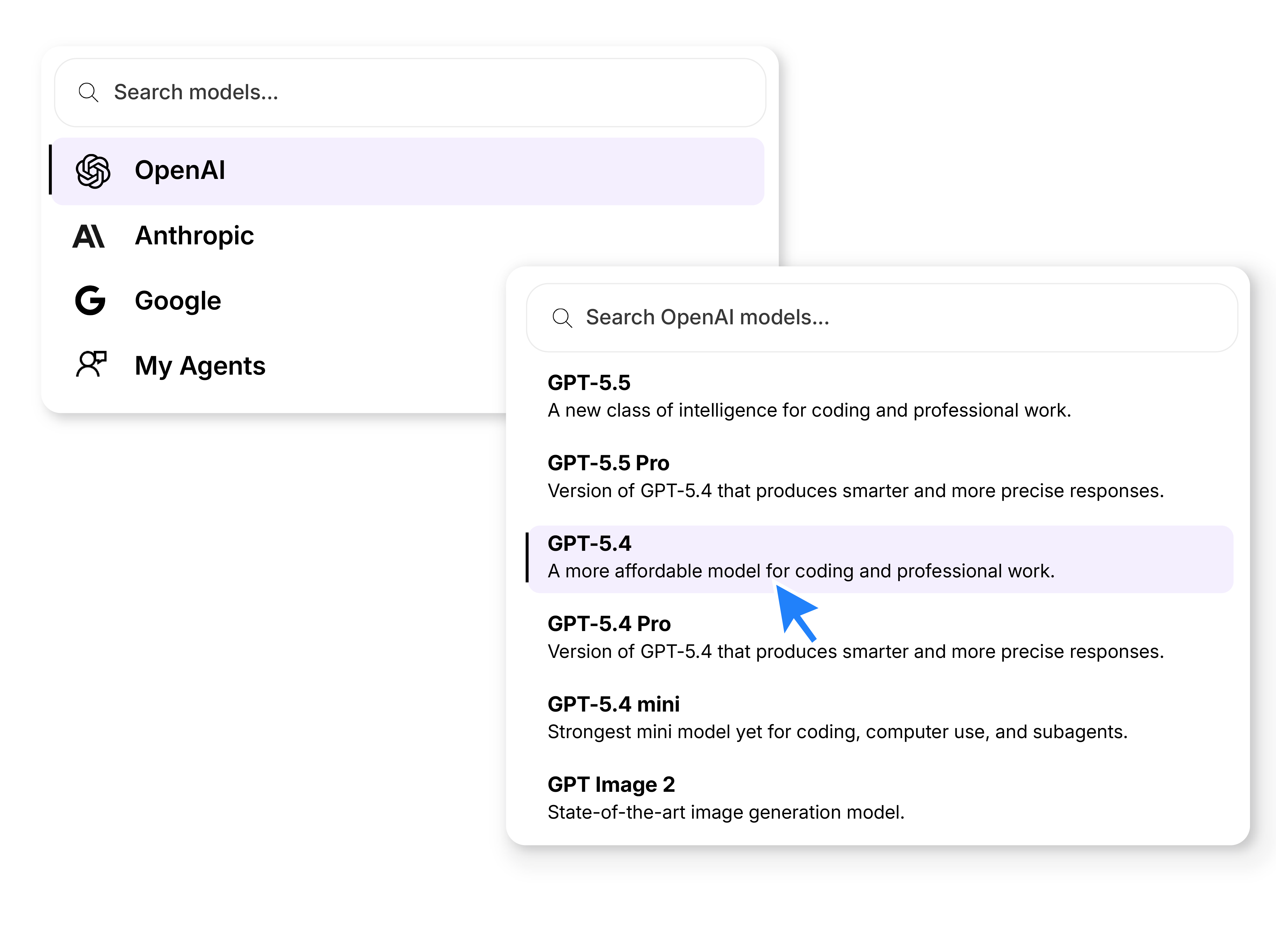
Every person in your agency should have access to GPT, Claude, Gemini, and any other frontier model they need. Not just the model the agency happens to subscribe to.
That doesn't mean everyone will use every model equally. Your copywriter may still prefer Claude. Your strategist may prefer GPT.
And, that's the point. Preferences are good!
With every frontier model available in one workspace, anyone on your team can switch mid-task and use the model that fits the job rather than settling for the model they happen to have.
Premium models should be available too: advanced reasoning, expanded context, faster response times, and higher-capability outputs. All without attaching a separate premium subscription to every person on the team.
Compare outputs before you choose
Different models can produce very different answers from the same prompt. One may have the stronger structure. Another may better understand the tone. A third may catch an issue the others missed.
A multi-model workspace lets your team run the same prompt through two models and compare the answers side by side.
They can evaluate the structure, tone, accuracy, reasoning, and recommended next steps before deciding which response to use.
Instead of guessing which model will perform better, your team can see the difference, and continue to work with the stronger output.
Side-by-side comparison also creates a built-in quality control step. Teams can challenge assumptions, spot inconsistencies, and sanity-check important work from the onset.
Work without message caps or limits
Agency work does not stop because a chat subscription reaches its limit.
Things happen! Deadlines create spikes in activity. Campaign launches require dozens of iterations. Research expands. Client feedback arrives and their priorities shifted.
Your team should be able to run as many prompts as the job requires without hitting message caps, being throttled during peak production, or waiting for access to reset.
That matters even more when multiple people are working across several client accounts. AI capacity should scale with the work, not become another resource the team has to ration.
Create text, images, and code in one place
Multi-model does not always mean multimodal, but for agency production, the two often overlap.
Teams rarely work in one format. A campaign may require messaging, social visuals, a landing page, and supporting code. Producing each piece in a different tool breaks context and creates another handoff.
- Text: Develop proposals, content, strategy documents, campaign concepts, and client reports. From early drafts through polished deliverables.
- Images: Generate campaign visuals, social assets, concept mockups, and creative variations without restarting the brief in another platform.
- Code: Write, refactor, and debug code, generate tests, and search codebases without requiring deep engineering expertise for every task.
When production happens in one connected workspace, the brief, decisions, feedback, and deliverables stay together from start to finish.
Models work better with the right knowledge
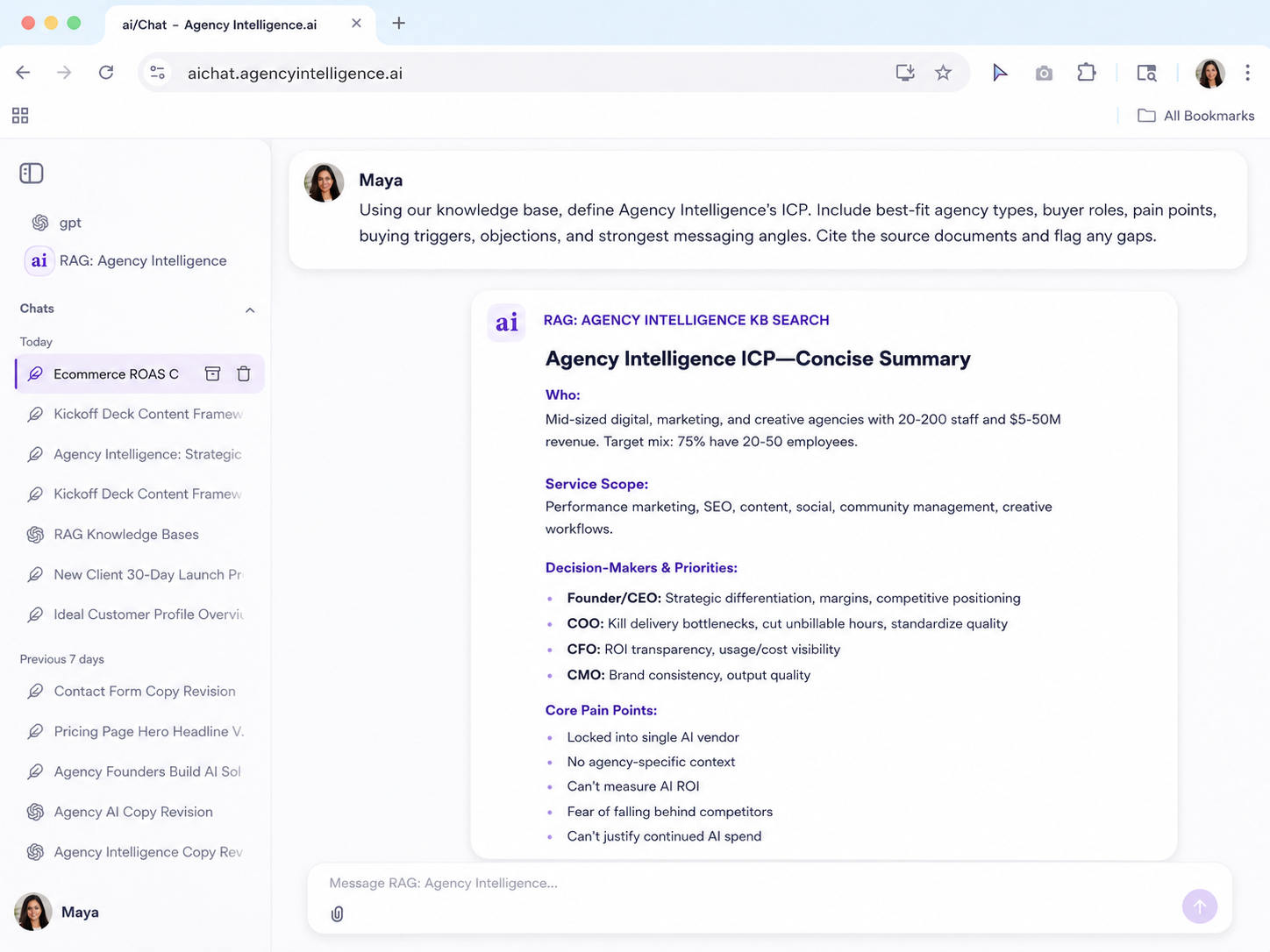
Models are engines. What they produce depends on what they know.
Without the right context, even the most advanced model produces work that sounds generic.
When models can automatically draw from your agency and client knowledge, brand guidelines, agency standards, approved messaging, client history, and project constraints become part of every response.
Switch models mid-project and the context follows.
Your team does not have to re-upload the same documents, repeat the same instructions, or rebuild the brief every time it tries another model. Outputs remain accurate, relevant, and on-brand regardless of which model, guided by which human, produces them.
That is the difference between AI output that sounds like your agency and AI output that sounds like everyone else's.
Match the model to the job
A strong multi-model approach looks less like model loyalty and more like intentional routing.
Use fast models for intake, extraction, summarization, and outlining. Use higher-capability models for creative development, reasoning, and structure. Use premium models for final polish, consistency checks, and high-stakes client deliverables.
Then compare outputs when the answer matters.
The point is not to accumulate more models. The point is to make sure the right model is always available when the work calls for it, with the ability to compare results, without message caps, without switching tools, and without starting over.
That is exactly what ai/Chat is built for.
GPT, Claude, Gemini, and more in one connected workspace. Easily run models side by side, compare their outputs, carry agency and client knowledge into every conversation and workflow, and use as many prompts as the work requires.
Every model for every person.
Stop being locked into one model
See how agencies use multiple models to compare outputs, sanity check work, and produce better deliverables.